P.O Box 20, Ibanda-Uganda| Tel: +256-2-612244| E-mail: [email protected]

NARO Trains Kazo Veterinary Officers on New Anti-Tick Vaccine
Kazo district has taken a major step toward controlling tick-borne diseases following a training by the National Agricultural Research Organization (NARO) on the use of the NARO VAC-ATVI injectable anti-tick vaccine.
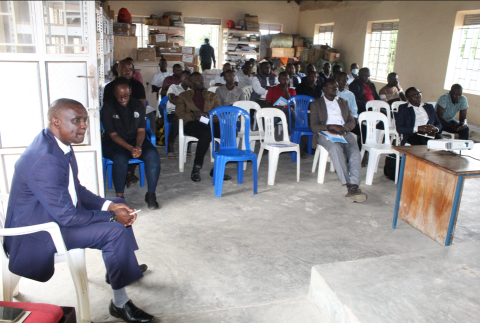
The training, held yesterday at the district headquarters council hall, brought together district and private veterinary officers from all sub-counties and town councils.
Leading the NARO team, Dr. Fred Kabi shared the history behind the development of the vaccine and guided participants on how it works. He trained veterinary officers and district leaders both political and technical on the operation, administration and benefits of the vaccine in controlling tick infestations in animals.
The Chief Administrative Officer of Kazo district, Hajji Badru Mayanja Majwala, thanked NARO for innovating a homegrown vaccine, describing it as a major achievement for Uganda. He appreciated the government and NARO for selecting Kazo as one of the districts where vaccine trials were conducted and commended district veterinary officers for their dedication.
Mayanja also cautioned veterinary officers to firmly fight the sale of meat from dead animals, warning that the practice is dangerous to human health and must be eliminated.
Kazo district LC5 Chairperson, Rev. Samuel Mugisha Katugunda, expressed gratitude to the NARO scientists, noting that as a farmer himself, he has lost several cows to tick-borne diseases. He thanked President Yoweri Kaguta Museveni and the NRM government for supporting local innovation, saying Uganda developing its own vaccines is the right direction.
Deputy Resident District Commissioner, Mugisha Bazirio Paddy, applauded Ugandan scientists for their work and specifically praised Dr. Kabi for the innovation. Speaking humorously in Runyankole that Dr. Kabi “akozire ekya akabi,” meaning he had done something great. Paddy described the vaccine as one of the development gains Ugandans are encouraged to protect and thanked the people of Kazo for supporting President Museveni, saying it ensures continuity of such achievements. He also urged private veterinary practitioners to maintain professionalism in their work.
For over a century, tick control relied mainly on chemical acaricides, starting with arsenicals. While effective in the short term, acaricides have led to widespread tick resistance, environmental pollution and harm to non-target organisms such as bees and birds. The rising cost of developing new acaricides and faster resistance has made sustainable alternatives necessary.
Anti-tick vaccines are considered a safer, more sustainable solution. They work by triggering a protective immune response in vaccinated cattle. When ticks feed on vaccinated animals, their biological functions are disrupted, leading to reduced survival and lower tick populations over time.
The Ugandan anti-tick vaccine was developed through a collaboration between NARO and the Health and Biotechnology group at the Institute for Game and Wildlife Research in Spain, led by Prof. Jose de la Fuente. Over the past decade, the partnership has produced vaccines targeting major tick species affecting Ugandan cattle, including the brown ear tick (Rhipicephalus appendiculatus), African blue tick (Rhipicephalus decoloratus), and tropical bont tick (Amblyomma variegatum).
The vaccine is derived from a protein known as Subolesin, extracted from native tick species. Early research was conducted by NARO scientist Kasaija Paul during his PhD studies in Spain. Two vaccines have been developed: an injectable and an oral version.
The injectable vaccine is administered into the muscle around the neck, while the oral vaccine is given through the mouth or mixed with cattle feed.
The collaboration between Ugandan and Spanish scientists demonstrates the power of international partnerships in addressing livestock health challenges and promoting sustainable agricultural development.
By Tinyefuza Naboth-Communications officer Kazo district
Wednesday, February 4, 2026
Event date:
Wednesday, February 4, 2026
image: